ServicesLight Demolition
Light Demolition in the University of California-Davis Area
We take down the stuff that has to go before your next project can start: old decks, fences, patio covers, cabinets, tubs and non-structural walls. We check what needs a permit, we keep utilities safe, and we haul it all away when we're done.
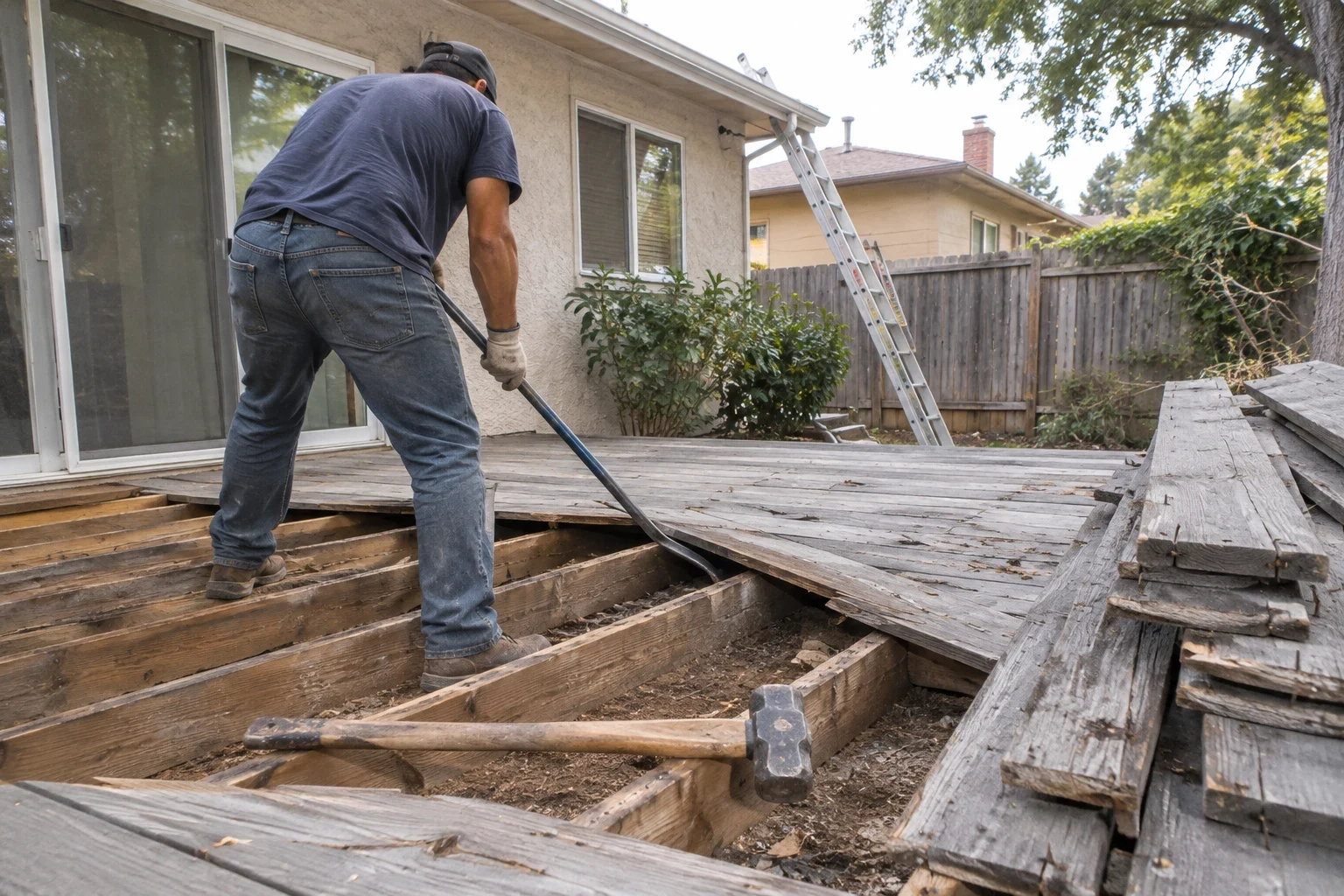
What light demolition covers
Light demolition is the tear-out work that comes before a remodel or after something wears out. A rotted deck. A leaning fence. A kitchen that needs to be down to the studs before the new cabinets show up. We do the tearing out, the loading and the hauling, so your contractor or you can start on a clean slate.
We stay away from anything that holds up the house. If a wall is load-bearing, or a job needs a structural engineer, we say so and stop there. That line keeps the work legal and keeps your home standing.
Permits are the part most people worry about, so we talk about them first. Some tear-outs need one and some don't. We tell you which is which at the estimate, before anything gets pulled apart.
What we tear out and haul
- Decks and patio covers
- We pull deck boards, joists and posts, cut out footings when you want them gone, and take down wood or metal patio covers. Old nails and screws get picked up so they don't end up in your tires or your feet.
- Fences and gates
- Wood, chain link or old vinyl, we remove panels, posts and the concrete around them. Before we dig, we have underground utilities marked.
- Kitchen and bath tear-outs
- Cabinets, countertops, vanities, tubs, tile and flooring. We cap nothing ourselves; plumbing and gas are shut off and capped by the right trade before we start.
- Non-structural walls and drywall
- We open up partition walls and strip drywall down to the framing. We confirm the wall isn't load-bearing before the first cut.
- Hot tubs and playsets
- Old spas get the power disconnected by an electrician, then we cut them into pieces that fit through your gate. Swing sets and wood play structures come apart the same way.
- Full haul-away and sweep
- Every board, chunk of concrete and bag of debris leaves with us. Metal and clean wood go to recycling where the local facilities take them.
Signs it's time to tear it out
Soft or spongy deck boards
If boards flex or a screwdriver sinks into a joist, the rot is usually deeper than it looks. Patching rarely holds.
A fence that leans after every storm
Posts rotted at the ground line won't hold new panels. Winter rain followed by long dry summers is hard on old wood, and once posts go, the whole run usually follows.
Your remodel can't start until it's gutted
Many contractors want the room empty and down to the studs before they bid or schedule. Tear-out first saves you paying a carpenter's rate for demolition.
A dead hot tub taking up the patio
A spa that no longer heats is just a heavy box collecting water. It's also a lot easier to remove before you redo the yard around it.
An inspection or sale flagged it
Unpermitted additions, failing decks and crumbling steps often show up on a home inspection. Removing them can clear the way for a sale or a proper rebuild.
How a demolition day runs
- 1
Free estimate at your home
We walk the job with you, measure, and look for wiring, plumbing, gas lines and anything that might be structural. You get a written price before we leave.
- 2
Paperwork and safety checks first
If the job needs a permit, we tell you and can pull it. In homes built before about 1980, we flag materials like popcorn ceilings, old vinyl tile and drywall mud for testing, since they can contain asbestos. Utilities get shut off by the right trade.
- 3
Tear-out and loading
We lay down floor protection on the path out, take things apart in order, and load as we go so the mess never piles up in your yard or driveway.
- 4
Haul, sweep and walk-through
We haul everything off, sweep and rake the area, and walk it with you. If something's left that shouldn't be, we deal with it before we call the job done.

What moves the price
We price light demolition by the work and the haul, and we go over that price with you before anything comes apart. Upfront pricing, no surprises. These are the things that make one tear-out cost more than another.
- Size and material
- A small wood deck comes apart fast. Concrete footings, tile set in mortar, or a cast-iron tub take more time and weigh a lot more at the dump.
- Access
- A ground-level deck by the driveway is easier than a second-story deck or a bathroom up a narrow staircase. Long carries add labor.
- City sign-offs and testing
- If the city wants paperwork or a material needs testing, that adds steps and fees. We tell you about both before work starts.
- Disposal and recycling
- Mixed debris, concrete and metal go to different places with different fees. Clean, sorted loads cost less to dump.
Light demolition questions
Something not covered here? (530) 869-6633
Do I need a permit to tear out my deck or a wall?
Sometimes. Removing an attached deck, taking out walls, or anything touching electrical, plumbing or gas often needs one, while pulling up a fence or old cabinets usually doesn't. Rules differ between the city and the county, so we check for your address. If one is needed, we can pull it.
Can you take out a load-bearing wall?
No. That needs an engineer's plan and a building contractor to put in a beam. We can do the drywall and cleanup around it once that's handled, but we won't cut structural framing.
What about asbestos or lead paint?
Older homes can have both in drywall mud, ceiling texture, flooring and paint. We don't disturb suspect material until it's been tested. If it comes back positive, an abatement company that handles that work has to remove it before we tear out.
Who shuts off the water, gas and power?
A plumber or electrician should cap lines and disconnect circuits before demolition. We'll point out what needs to be shut off during the estimate so you can line that up first.
Do you take the debris too, or just tear it out?
We take all of it. Tear-out and haul-away are one job. If your contractor is already producing scrap, our construction debris service can keep it cleared as the project moves along.
Can you remove a shed as part of the job?
Yes. Shed removal is its own service, and we can schedule it the same day as a deck or fence tear-out so you only have one crew in the yard.
Ready to clear the way for your project
Tell us what needs to come out and we'll come take a look. You'll know what the city requires, which safety steps apply and what it costs before we lift a hammer.