ServicesConstruction Debris
Construction Debris Removal in University of California-Davis
Your remodel left a pile of drywall, lumber and tile. We load it, sort what can be recycled, and take it where it belongs. You get the space back, and we keep the disposal tickets in case your inspector or contractor asks for them.
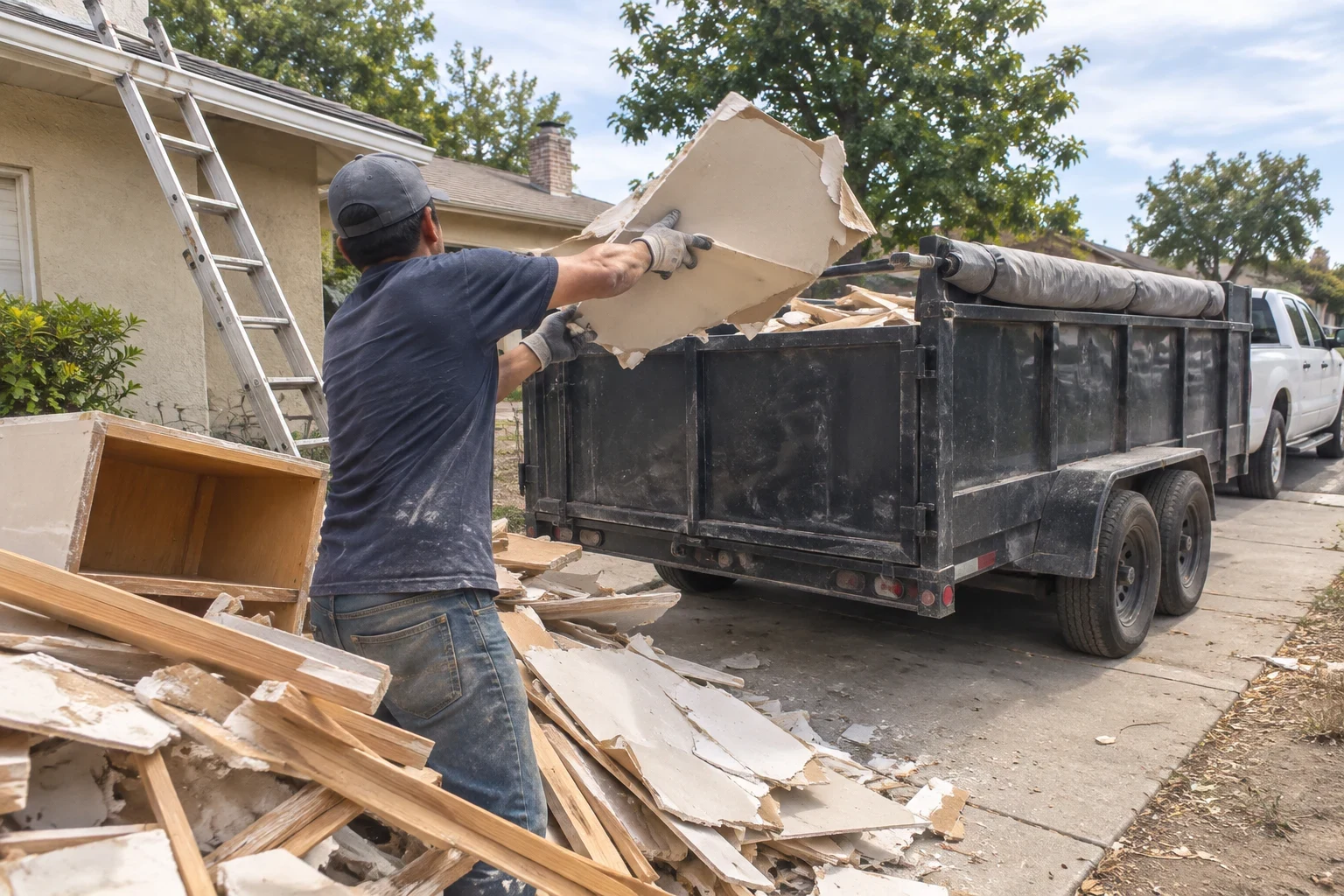
Debris from your project, gone the right way
Construction debris is the leftover material from building or tearing out: old cabinets, drywall scraps, roofing, broken concrete, flooring, trim and the packaging new stuff came in. It piles up fast, and most of it is too heavy or bulky for your curbside bins.
Where it goes matters. Many permitted projects in California have to keep a share of construction waste out of the landfill, and some inspectors ask for proof before final sign-off. We sort wood, metal, concrete and cardboard so they go to recyclers, and we hand you the weight tickets and receipts from each drop.
This works for homeowners finishing their own projects and for small contractors who would rather not spend a day on dump runs. If the pile also has old household junk mixed in, we take that too on the same trip.
What the job includes
- Loading from where it sits
- We pick up from the driveway, side yard, garage or the room itself. You do not need to drag anything to the curb first.
- Sorting for recycling
- Clean wood, scrap metal, concrete and cardboard get separated as we load. That keeps more out of the landfill and helps if your project has diversion rules.
- Disposal records
- We keep the receipts and weight tickets from the transfer station and recyclers. If your inspector or your contractor wants to see them, you have them.
- Heavy material
- Broken concrete, brick, tile and roofing are heavy and fill a truck by weight before volume. We plan the load for it so the truck stays legal on the road.
- Sweep-up after loading
- When the pile is gone, we sweep and rake the spot. Nails and screws are the main worry around a job site, so we look for them.
Signs it is time to clear the debris
Final inspection is coming
Inspectors want a clear, safe site. Piles of scrap by the door or in the yard can slow down sign-off.
The pile is blocking work
If crews or you are stepping over old drywall to reach the next room, the debris is costing time. Clearing it now keeps the project moving.
Rain is on the way
Wet drywall and cardboard get heavy and messy, and soaked material can cost more to dispose of. Hauling it before winter storms keeps it simple.
Your bins are full every week
Curbside service is not meant for construction waste. Overfilled bins can get left behind, and some materials are not allowed in them at all.
You do not want a dumpster on the street
A roll-off on a public street often needs a city encroachment permit. We load and leave the same day, so there is no box sitting out front.
How the day goes
- 1
Call and describe the job
Give us a quick rundown by phone: what you built or tore out and about how big the pile is. Then we pick a time to come see it.
- 2
Free, no-obligation estimate on site
We look at the pile and give you a price before we lift anything. If you say no, that is fine.
- 3
Load and sort
Our crew loads by hand, sorting recyclables as we go. We protect doorways and floors if we are carrying out of the house.
- 4
Drop off and paperwork
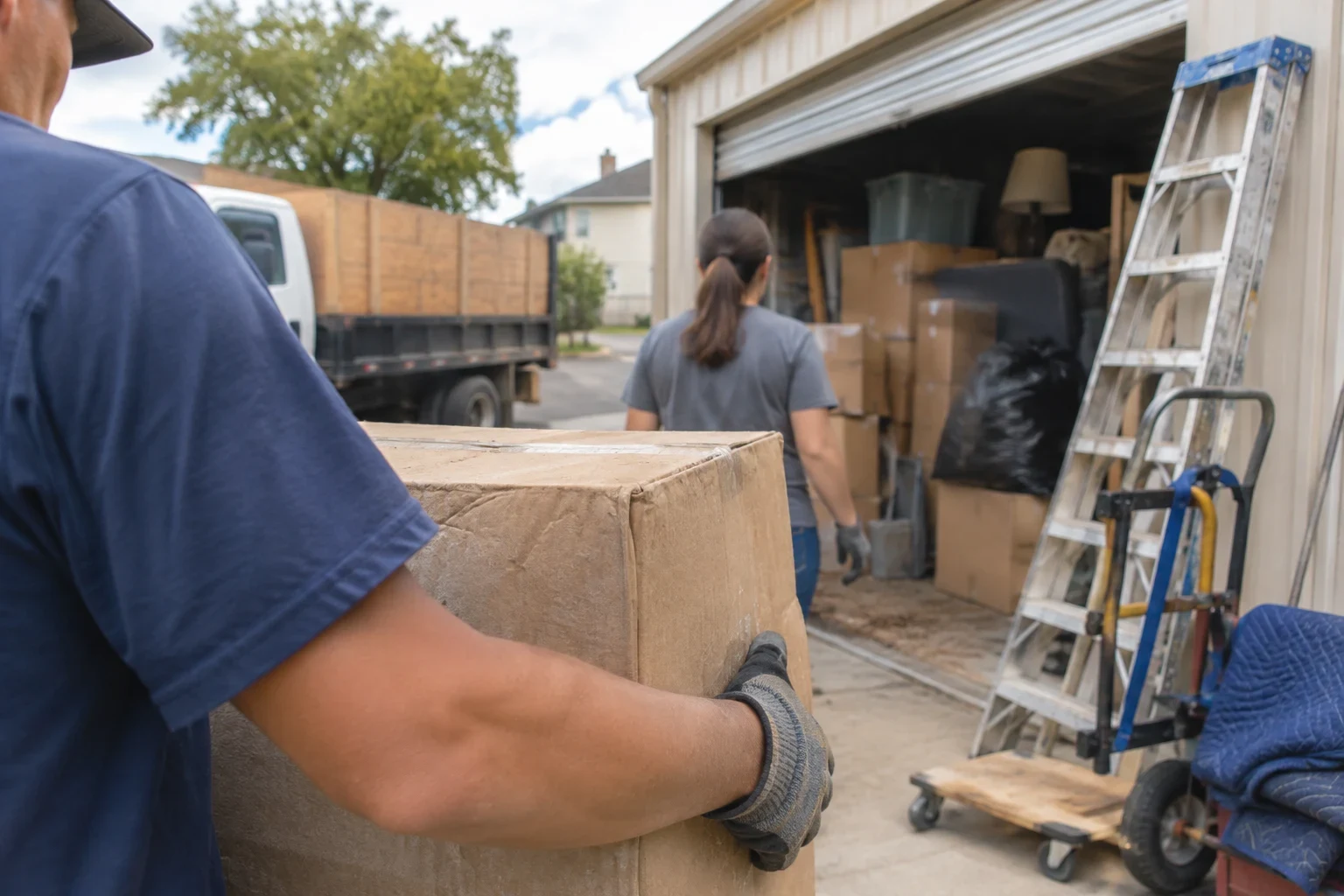
Material goes to recyclers and the transfer station. We hold on to the tickets for you if your project needs them.
What moves the price
Construction debris is priced mostly by how much truck space it takes and how heavy it is. We give you upfront pricing, no surprises, once we see the pile. Here is what changes the number.
- Volume
- A few bags of drywall scraps cost less than a full kitchen tear-out. Most of the price follows how much of the truck it fills.
- Weight of the material
- Concrete, tile, brick and roofing are heavy for their size. Drop-off fees are figured by the ton, so a dense pile runs higher than a light one that looks the same.
- Access
- A pile in the driveway loads fast. Carrying debris from a second floor or a tight backyard takes more time and more hands.
- Mixed or sorted loads
- Clean, separated material often costs less to drop off. A load with everything mixed together takes longer to sort.
Construction debris questions
Something not covered here? (530) 869-6633
Do you take asbestos, lead paint or other hazardous material?
No. Older homes can have asbestos in flooring, ceilings or pipe wrap, and lead in old paint. Those need testing and removal by an abatement specialist before anything gets hauled. If we see something suspect, we stop and tell you.
My permit says I have to recycle construction waste. Can you help?
Yes. We sort recyclables as we load and keep the receipts and weight tickets from each drop. Ask your inspector what form they want so you know what to hand over.
Do I need a permit for you to haul debris?
Usually not. Your building permit covers the project, not the hauling. Because we load into our truck and leave, you skip the street paperwork a dumpster can require.
Can you take old treated wood like fence posts or deck boards?
Treated wood has its own disposal rules in California and cannot go in with regular lumber. Tell us about it when you call and we will plan for it separately.
Can you tear out the old stuff too?
If you still need something taken apart, like a deck or interior walls that are not load-bearing, look at our light demolition service. We can do the tear-out and hauling on the same visit.
Get the pile gone before inspection
Tell us about your project and where the debris is. We will come out, look it over and give you a price before any work starts.