ServicesHauling
Hauling in University of California-Davis
We load what you need gone, tie it down and drive it to a place that is allowed to take it. Dirt, broken concrete, scrap metal, old appliances or a pile left from a project. You get a clear price before we lift anything.
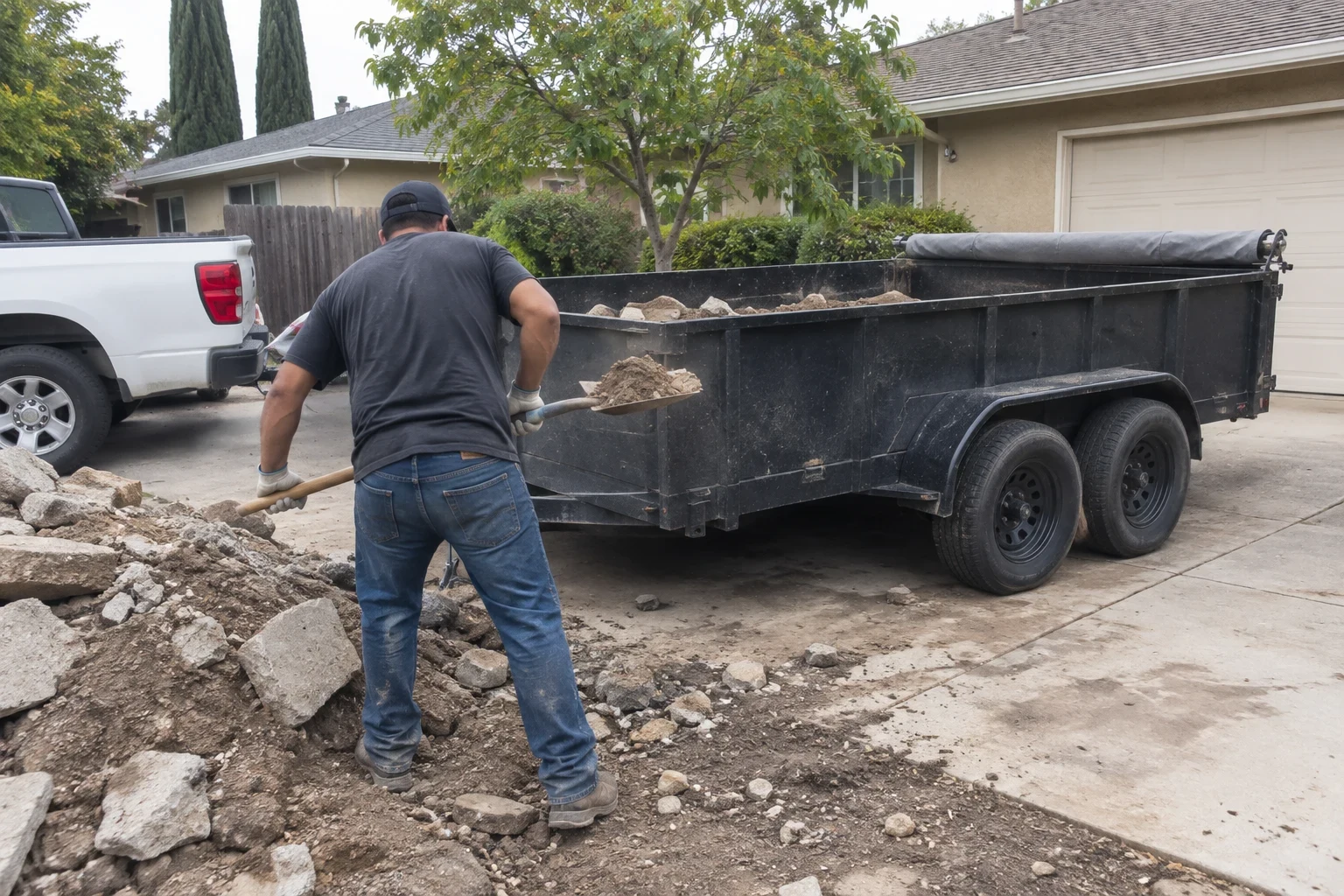
What our hauling service covers
Hauling is for loads that are too heavy, too bulky or too mixed for your trash cart or the back of a car. We bring the truck and the crew, do the lifting and take it all away in one trip when we can.
The part most people don't see is where it goes. Concrete, metal, appliances, electronics and yard waste each have their own drop-off, and some items are banned from the landfill under California rules. We sort the load so each piece lands where it is legally accepted, not in a ditch or someone else's dumpster.
If your job is a full room or a whole garage, our junk removal or garage cleanouts pages may fit better. Hauling is the right call when you already know what the pile is and just need it gone.
What's included when we haul for you
All the loading
We carry it out and stack it on the truck. You don't need to drag anything to the curb first.
Covered and tied-down loads
California law requires loads to be covered and secured so nothing blows or falls onto the road. Every load gets straps and a tarp before we pull out.
Sorting by drop-off
Metal goes to scrap, clean concrete and dirt go to a recycler that takes inert material, and general debris goes to a permitted transfer station. Sorting keeps your load legal and keeps usable material out of the landfill.
Appliances handled by the rules
Fridges, freezers and AC units hold refrigerant that has to be recovered by someone qualified before the metal is scrapped. We take them to recyclers set up to do that.
Straight talk on what we can't take
Paint, solvents, pool chemicals, motor oil and similar items count as hazardous waste. We'll tell you up front and point you to the household hazardous waste drop-off instead of hiding them in a load.
A quick sweep
When the truck is full, we sweep or rake the spot where the pile sat.
Signs it's time to have it hauled
The pile won't fit in your cart
Broken pavers, old fencing or a stack of scrap lumber will never go out with weekly pickup. A single trip clears it.
It's too heavy to move safely
Concrete chunks, rock and wet soil are heavier than they look. Hurting your back over a pile isn't worth it.
You're not sure it's allowed in the trash
Old TVs, batteries, tires and appliances all have disposal rules. If you're guessing, ask us before it ends up in the wrong place.
A project left a mess behind
After a patio tear-out or a fence swap, the leftover material can sit for months. Getting it out keeps weeds and pests from moving in.
An HOA or landlord wants it gone
A notice about debris in a side yard or driveway usually comes with a deadline. We can get it cleared before then.
How a hauling job goes
- 1
You call and describe the load
Tell us what it is, about how much, and where it sits. Photos help, but we'll come look if it's easier.
- 2
We give you the price on site
We look at the pile, check for any items with special disposal rules and tell you the price before we start. Upfront pricing, no surprises.
- 3
We load, secure and sort
The crew loads the truck, keeps metal and concrete apart from general debris, and straps and tarps the load. In the summer heat we like to start early, so the crew stays sharp and you're not out in it.
- 4
We drop it at the right places
Each part of the load goes to the facility allowed to take it. If you want to know where your things went, just ask and we'll tell you.
What sets the price of a haul
Most of the cost comes down to how much space the load takes on the truck and what the drop-off sites charge to accept it. Heavy material and items with special handling rules cost more to dispose of than mixed light debris. We walk through these with you before we start.
- Volume
- The more of the truck your load fills, the more it costs. A small pile and a full truckload are priced very differently.
- Weight and material
- Concrete, dirt and roofing are dense and charged by weight at most facilities. Light, bulky items cost less per load.
- Regulated items
- Appliances with refrigerant, tires and electronics carry their own recycling fees. We'll point them out when we look at the load.
- Access
- A pile in the driveway goes fast. A pile behind a narrow side gate, down a slope or in a backyard takes longer to carry out.
Hauling questions we hear a lot
Something not covered here? (530) 869-6633
Do I need a permit to have debris hauled away?
Usually not for a haul from your property. Permits come into play when a dumpster or container sits in the street, and our truck leaves the same day, so that doesn't apply. If your debris came from permitted work, keep your receipts; we can tell you where the load went.
Can you take dirt and broken concrete?
Yes. Clean dirt and concrete go to recyclers that accept inert material, which is often cheaper than mixing them in with trash. Keep them separate from other debris if you can, and the price usually comes down.
What won't you haul?
We don't take hazardous waste like paint, solvents, fuel, pesticides or asbestos. Those belong at a household hazardous waste facility or with an asbestos abatement specialist who handles that material. We'll tell you which is which when we look at the pile.
Do I have to be home?
For the estimate it helps, so we can agree on the price together. For the pickup, if the load is outside and easy to reach, you don't need to stand there while we work.
Do you haul from nearby towns?
Yes. Besides University of California-Davis, we work in Davis, Woodland, Dixon, Winters and West Sacramento. Tell us your town when you call.
Got a pile that needs to go?
Tell us what it is and where it sits. We'll come look, give you a free, no-obligation estimate and haul it to the right place.